Serving Albany, OR and surrounding areas. (458) 233-8057
Your home needs a foundation built for Albany's wet winters and clay soils. We handle permits, inspections, and the soil prep that keeps slabs level and crack-free for decades.
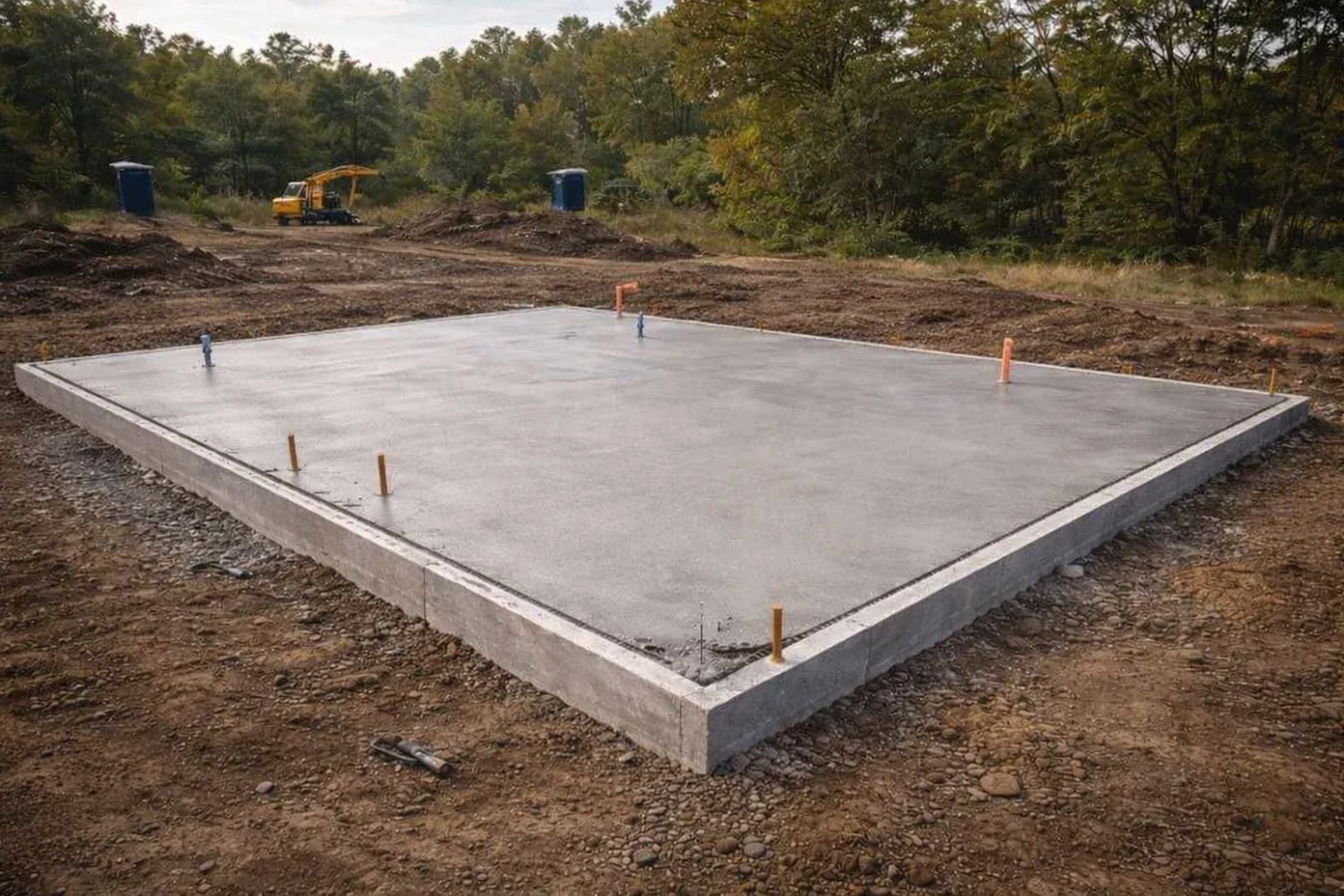
Slab foundation building in Albany OR creates a single flat concrete base that becomes both the floor and structural support for your home, poured directly on compacted soil with a moisture barrier underneath. Most residential slabs take three to seven days of active work, but the full timeline runs four to six weeks once you account for permits, inspections, and the 28-day curing period that lets the concrete reach full strength.
If you are building a new home, garage, or accessory dwelling unit in Albany, a properly built slab eliminates the moisture problems that plague crawl spaces during the Willamette Valley's long rainy season. The work includes excavation, soil compaction, gravel base installation, steel reinforcement placement, and the pour itself. Every step matters, because the ground prep you never see is what determines whether your foundation lasts 10 years or 50. Many homeowners also need foundation installation services for larger projects or complex site conditions.
Albany's Willamette silt loam soils shift with the wet and dry seasons, which is why your contractor should be talking about compaction standards and drainage details before they ever quote a price. A slab that skips these steps will show the cost within a few years.
If you are building a new home, garage, ADU, or significant addition in Albany, a slab foundation is often the most practical and cost-effective starting point. Your contractor and the city's building department will confirm what type of foundation your specific lot and project require, but for new construction on level lots, slabs offer excellent value and eliminate the ongoing moisture management that crawl spaces demand.
If you have an older Albany home with a crawl space and you are noticing musty smells, soft spots in your floors, or visible mold under the house, some homeowners choose to convert to a slab during a major renovation. Albany's wet winters mean crawl spaces are constantly fighting moisture, and a properly built slab with a vapor barrier eliminates that battle entirely. This is a significant project, but it can solve persistent moisture problems that no amount of crawl space maintenance fully fixes.
If you can see gaps forming between your home's exterior walls and the ground, or if the soil around your foundation edge seems to be dropping, this can signal that the ground beneath is shifting. In Albany's silt-heavy soils, this kind of settling is more common after unusually wet winters followed by dry summers. It does not always mean you need a new slab, but it does mean you need a foundation professional to take a look before the problem gets worse.
When a foundation shifts even slightly, the frame of your house moves with it, and the first place you usually notice is doors and windows that suddenly do not operate the way they used to. This is especially worth paying attention to if the change happened after a particularly wet winter or a dry summer, both of which cause Albany's soils to expand and contract. It is not always a foundation problem, but it is a reliable early warning sign worth investigating.
We build slab foundations for new homes, garages, accessory dwelling units, and commercial structures across Albany and the surrounding Willamette Valley. Every project starts with a site visit to assess your soil conditions, drainage patterns, and access, because no two lots are identical. From there, we handle the permit application through the City of Albany, coordinate inspections at the required stages, and complete the full sequence of excavation, compaction, reinforcement placement, and pouring. For homeowners converting an existing crawl space to a slab or adding onto an older home, we also provide foundation installation that ties new work to your existing structure correctly.
If your project involves specialty finishes or decorative elements, we coordinate with our concrete footings work to ensure load-bearing edges are sized and reinforced properly for Albany's seismic zone requirements. The steel reinforcement inside your slab is not optional here, it is required by Oregon's building code to handle earthquake forces and seasonal soil movement.
Best for new home construction, ADUs, and garage projects where a level lot and proper drainage make slabs the most cost-effective choice.
Single-pour slabs with thickened edges that combine the floor and footings in one continuous piece, ideal for smaller structures and faster timelines.
For older Albany homes where ongoing moisture issues make a slab conversion worth the investment during a major renovation or addition.
Durable concrete floors for workshops, barns, farm structures, and light commercial buildings that need a solid, easy-to-maintain base.
Albany's 44 inches of annual rainfall, concentrated heavily between November and March, creates conditions where moisture control is the foundation challenge that matters most. A properly built slab with a continuous polyethylene vapor barrier and correct gravel base prevents ground moisture from wicking up through the concrete and into your home. Crawl spaces, by contrast, require ongoing ventilation, vapor barrier maintenance, and dehumidification to keep moisture at bay. In Albany's climate, slabs eliminate that perpetual battle, which is why they have become the preferred choice for new residential construction in the Willamette Valley over the past two decades.
The Willamette silt loam soils common throughout Albany and Linn County expand when wet and contract during dry summers, creating seasonal movement that puts stress on any foundation not designed with that reality in mind. The compaction standards and gravel base thickness we use for Albany slabs are higher than what works in sandy or rocky soils elsewhere in Oregon. Homeowners in Corvallis and Lebanon face similar soil conditions, and the foundation prep that works here works there for the same reasons.
Oregon's seismic zone requirements also shape how we build every slab in Albany. The Cascadia Subduction Zone offshore creates earthquake risk that the state's building code accounts for through specific steel reinforcement and anchor bolt placement standards. These are not optional upgrades, they are baseline requirements that protect your home if the ground shakes. The City of Albany's inspection process verifies this work before the concrete is poured, which is your assurance that the foundation was built to code when it matters most.
We visit your lot to assess soil conditions, access, and project scope. Most estimates are ready within a few days, and we will walk you through what is included, what the timeline looks like, and how the City of Albany's permit process works.
We submit the permit application to the city and schedule the required inspections. Permit approval typically takes one to two weeks. You will sign as the property owner, but we handle the paperwork and coordination. You should hear back from us within one business day of any permit updates.
We excavate the area, grade and compact the soil, and install the gravel drainage base and vapor barrier. Forms are set up and steel reinforcement is placed inside. The city inspector reviews everything before any concrete is ordered, which is the checkpoint that protects you most.
On pour day, the concrete truck arrives and we fill the forms, level the surface, and finish it by hand. The slab then cures for at least seven days before the inspector returns for the final sign-off. Full strength develops over 28 days, and we will advise you on when the next phase of your project can safely begin.
We will visit your site, explain the process, and give you a written estimate. No pressure, no obligation.
Call (458) 233-8057We have poured more than 200 residential and commercial slabs in Albany and Linn County over the past decade. That local volume means we know which soil conditions require extra compaction, how Albany's inspectors want to see rebar placement, and which gravel suppliers deliver clean base material that compacts correctly. Experience in this specific area matters more than a generic license.
We have never had a slab foundation fail a City of Albany inspection, because we follow Oregon's building code requirements to the letter. The steel reinforcement, vapor barrier placement, and footing thickness we use are designed to meet or exceed what the inspector is checking for. That means you get a signed-off permit at the end, no delays, no callbacks, and no uncertainty about whether the work was done right. Learn more at the City of Albany Community Development page.
Albany's silt loam soils expand when wet and contract when dry, and we account for that in every slab we pour. The gravel base thickness, compaction standards, and drainage grading we use are matched to local soil behavior, not copied from a job in a different part of the state. That site-specific approach is what keeps slabs level and crack-free through Albany's wet winters and dry summers.
We carry an active Oregon Construction Contractors Board license, which you can verify in seconds on the CCB website. That license means we are bonded and insured, and you have real legal recourse if something goes wrong. It also means we are accountable to a state oversight body that takes complaints seriously. You can check any contractor's status at Oregon CCB before signing anything.
We built our reputation one Albany slab at a time, and we protect it by doing the soil prep and reinforcement work that most homeowners never see but that determines whether a foundation lasts 10 years or 50. That is the difference between a contractor who understands local conditions and one who treats every job the same.
Spring and summer pour slots fill up fast in the Willamette Valley. Call today to lock in your timeline before the busy season.