Serving Albany, OR and surrounding areas. (458) 233-8057
Professional retaining wall installation that holds up through Willamette Valley winters with proper drainage systems engineered for Albany's clay soil.
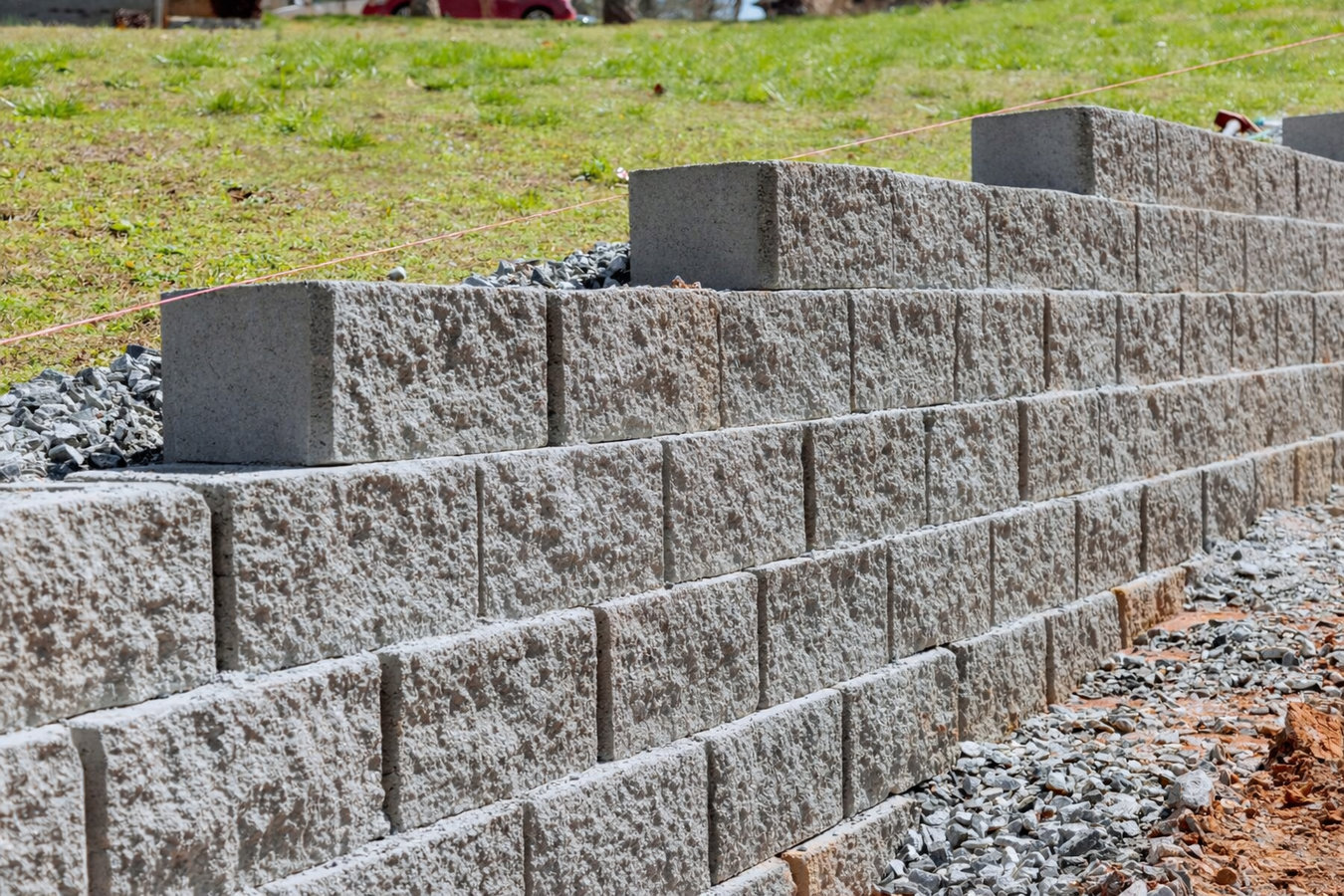
Concrete retaining walls in Albany hold back soil on sloped properties so it does not slide, erode, or wash away during the wet months, most jobs for residential hillside yards take two to five days depending on wall height and length. A properly built wall stops the slow loss of soil that happens after every heavy Willamette Valley rainstorm, protecting your lawn, garden beds, driveway, and foundation from damage over time.
If your yard has a slope that makes it hard to use, or if you are watching soil creep downhill every winter, a retaining wall creates flat, usable terraces that turn wasted space into areas you can actually landscape or enjoy. Many Albany homeowners pair retaining wall work with concrete floor installation for garage or patio foundations, or add concrete steps to connect the new level areas safely.
After a heavy rainstorm, check the base of any slope on your property. If you find soil, mulch, or gravel collecting at the bottom, or you can see bare roots or exposed soil on the hillside, that is erosion in progress. Left alone, it gets worse every wet season and can eventually undermine your lawn, garden beds, or even your driveway.
If you have an older concrete or block wall and it is starting to tilt forward, showing cracks along the face, or developing white chalky stains, those are warning signs. Leaning means the wall is losing the battle against soil pressure, and cracks or staining often mean water is getting in where it should not. These problems do not fix themselves.
Albany's wet winters mean a lot of water moving across your property. If you notice water collecting against your house, garage, or another structure after rain, a slope somewhere may be directing water the wrong way. A retaining wall combined with proper grading can redirect that flow away from your home before it causes foundation or basement problems.
If the soil alongside your driveway or a path is eroding away, the edge of the pavement can start to crack and sink. This is especially common on properties where a driveway runs along a slope. A small retaining wall along that edge can stop the erosion and protect the pavement from further damage.
We build both poured concrete walls and concrete block (segmental) retaining walls, with the design chosen based on your site conditions, soil type, and how much load the wall needs to hold. Poured concrete walls are one solid piece formed on-site, making them ideal for heavy clay soils like those common in the Willamette Valley. Concrete block walls stack interlocking units and offer more flexibility in shape, which works well for curved or tiered designs. Every wall we build includes a proper drainage system behind it so water can escape during Albany's wet months.
For properties with slopes that drop more than 4 to 5 feet, we often recommend tiered walls, building two or three shorter walls in steps rather than one very tall wall that requires heavy engineering. We also handle concrete floor installation for patios or parking areas created by the retaining wall, and concrete steps to connect different levels safely. When erosion has damaged existing pavement, we can also provide related services like driveway edge protection or walkway repair.
Best for heavy soil loads and tall walls, one solid continuous structure.
Faster to install, works well for curved designs and stepped terraces.
Multiple shorter walls for steep slopes, safer and often more affordable.
Gravel and perforated pipe systems to handle Willamette Valley rain.
Albany sits in the Willamette Valley and receives roughly 44 inches of rain per year, with most of it falling between October and April. That means the soil behind a retaining wall gets saturated for months at a stretch, which puts enormous pressure on the wall. A contractor who does not build a serious drainage system into your wall is setting you up for failure within a few years. The heavy Willamette silt loam and clay-based soils common in Albany hold water rather than letting it pass through, which makes drainage even more critical than in sandy or rocky areas.
Many of Albany's residential neighborhoods, particularly in the hills east of downtown and in older subdivisions, were developed in the mid-20th century with minimal grading work. Decades of rain and soil movement mean that slopes that looked fine 30 years ago may now be showing signs of erosion or creep. If your home was built before 1980, it is worth having a contractor assess whether your existing slope or any older wall is still doing its job. We serve homeowners across Albany and nearby communities including Corvallis and Lebanon, where similar soil and weather conditions require the same attention to drainage and base preparation.
We walk your property, look at the slope and soil, and provide a written estimate within one business day. No cost, no obligation.
If your wall needs a permit, we handle the paperwork with the City of Albany. We schedule your job for dry weather when soil conditions are best.
We dig out the area, set a solid base, and build the wall with drainage installed before backfilling. You can see the drainage work before it gets covered.
After backfilling and cleanup, we walk you through the curing period and when it is safe to landscape or put weight near the wall.
We provide free on-site assessments with no-pressure quotes. You will see exactly what we are building before any soil gets covered up.
Call (458) 233-8057We show you the gravel and pipe drainage system before it gets backfilled, so you know with your own eyes that the water has somewhere to go. A wall that was built right behind the scenes is the only kind worth having, especially in Albany's wet climate.
The heavy clay soils common in Albany hold water differently than sandy ground, and a wall designed without accounting for that will eventually show it. Every wall we build is sized and engineered for the actual soil conditions on your property, not a generic catalog design.
We pull the building permit through the City of Albany Development Services, submit the engineered drawings if required, and coordinate any inspections. You stay informed, but you do not have to become an expert in local building requirements just to get your yard fixed.
We hold a current Oregon Construction Contractors Board license, which you can verify yourself. This is the state license required for anyone doing construction work in Oregon, and it gives you legal recourse if something ever goes wrong.
A retaining wall is only as good as what you cannot see behind it. We build walls that hold up through Albany winters because we do not cut corners on the foundation or the drainage, and you get to see the work before it gets covered up.
Spring and summer slots fill fast. Lock in your retaining wall project before the next rainy season so your property is protected when the wet weather returns.